Chen Chunjie on Mixing Dolby Atmos with Apogee Plugins
For Chen Chunjie, mixing isn’t just about sound — it’s about space, emotion, and intention.
Now in his third year studying Music Recording at the Beijing Film Academy Sound School, Chen has already developed a clear creative philosophy: technology should serve musical expression, not overshadow it. That mindset became especially clear during a recent Dolby Atmos project where he challenged himself to complete a full immersive mix using only Apogee plugins.
The result wasn’t just a finished mix — it was a shift in how he thinks about sound.
From Early Curiosity to Focused Craft
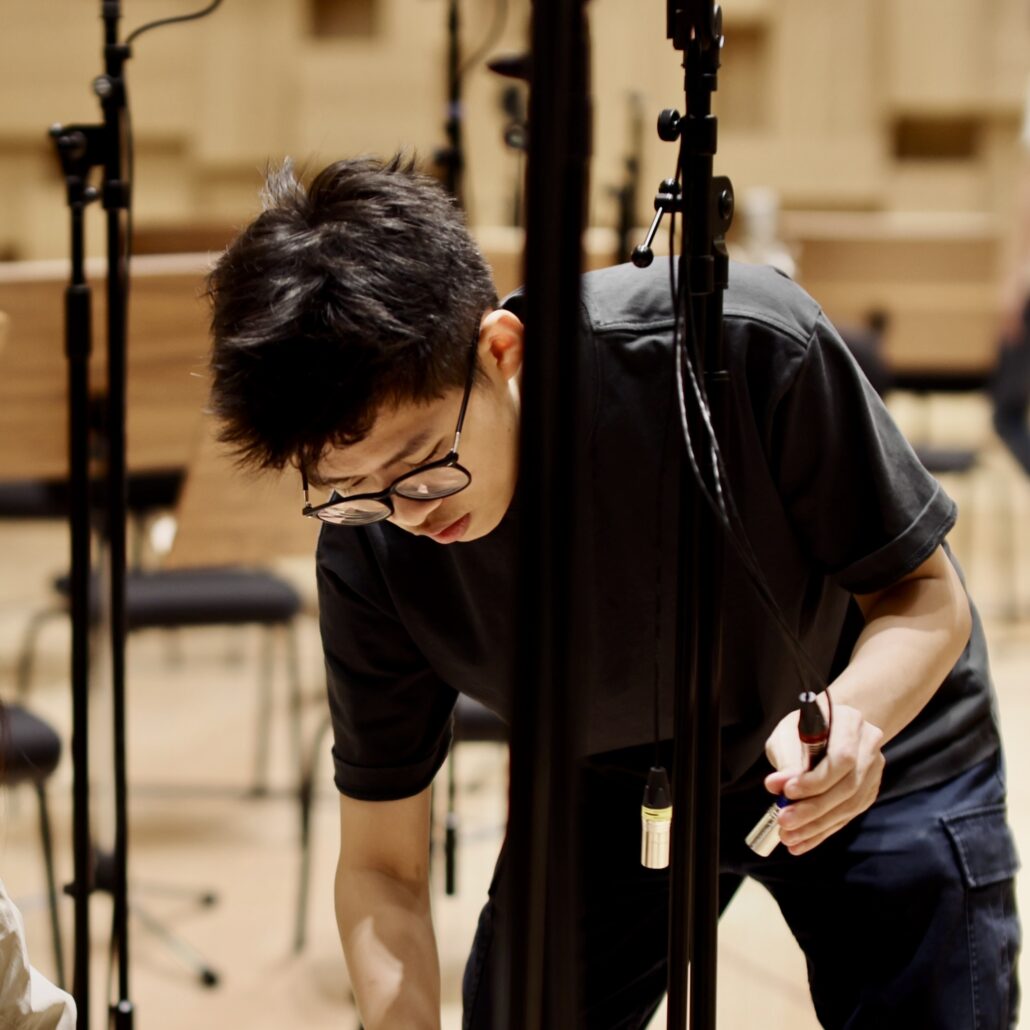
Chen’s interest in recording started long before university.
“My fascination with recording began in middle school,” he explains. “I stayed closely connected to it through different channels, and that interest kept growing as I explored more.”
Choosing Music Recording at Beijing Film Academy gave him something he was searching for: structure. Through academic training, hands-on projects, and professional competitions, Chen built a foundation that balanced theory with real-world practice.
“Continuous practice and reflection were key,” he says. “That’s how I started to understand not just how to record, but why certain choices matter.”
Why Dolby Atmos Became a Personal Challenge
Chen’s move into Dolby Atmos wasn’t accidental — and it wasn’t just for a class.
“With more platforms supporting immersive audio, Atmos is becoming impossible to ignore,” he says. “But beyond trends, it opens up entirely new creative possibilities.”
What intrigued him most was how Atmos forces a rethink of traditional mixing habits.
“In stereo, your thinking can become very fixed,” Chen explains. “Atmos expands spatial freedom, but it also demands more responsibility. Every placement decision affects emotional flow.”
Rather than treating Atmos as “stereo plus more speakers,” Chen approached it as a new language — one that required patience, restraint, and intention.
The Track: Ladybird by Chart in Your Soul
The song Chen chose to mix, Ladybird by Beijing-based indie rock band Chart in Your Soul, gave him the perfect canvas.
“The track has a dark, introspective mood with strong emotional tension,” he says. “But it doesn’t rely on aggression. The emotion unfolds gradually through timbre, rhythm, and space.”
That slow-burn structure made it ideal for immersive mixing. Instead of dramatic movement for its own sake, Chen could use space as a narrative tool — revealing emotion over time.
Committing to an Apogee-Only Plugin Workflow
After gaining experience with Apogee hardware and plugins — and learning about Apogee’s EDU Program — Chen made a bold decision.
“When I heard Bob Clearmountain was visiting our school, I decided to complete the entire Atmos mix using only Apogee plugins,” he says.
It was both a creative constraint and a learning opportunity.
“I wanted to understand Bob Clearmountain’s mixing mindset, not just copy a sound,” Chen explains. “Using the Clearmountain plugins made that possible.”
More than anything, the limitation sharpened his focus.
“When tools are consistent and intuitive, you stop thinking about the plugins and start thinking about music.”
Clearmountain’s Domain as a Creative Anchor
If Chen had to name one “secret weapon,” it would be Clearmountain’s Domain.
“It’s not just a reverb,” he says. “It’s a complete spatial thinking tool.”
What stood out most was how clearly the signal flow reflects Bob Clearmountain’s philosophy.
“The presets aren’t just results — they show how he thinks,” Chen explains. “You can see how balance, tone, and space interact.”
That transparency helped Chen refine his own instincts instead of relying on trial and error.
A Real Example: Shaping Bass in Atmos
One of Chen’s favorite moments in the mix happens during a section where the bass shifts into slap playing.
“The energy changes dramatically there,” he says. “I wanted to preserve the dynamics while giving it more spatial depth.”
He isolated that section and sent it through Clearmountain’s Domain, starting with a Rolling Stones live-style preset before making subtle adjustments.
“The goal was to add a sense of live space without breaking cohesion,” Chen explains. “It needed to stand out emotionally, not technically.”
That balance — excitement without distraction — became a recurring theme throughout the mix.
Beds vs. Objects, and the Importance of Restraint
Despite working in Dolby Atmos, Chen didn’t lean heavily on objects.
“I prefer to build the structure using beds first,” he says. “Atmos doesn’t require complex object movement to be effective.”
When objects were used, Apogee tools like Clearmountain’s Domain and Spaces helped them sit naturally within the sound field, while Apogee compressors ensured stability and clarity.
“Precision matters more in Atmos,” Chen notes. “Everything is exposed.”
Monitoring, Reality, and the Listener’s Experience
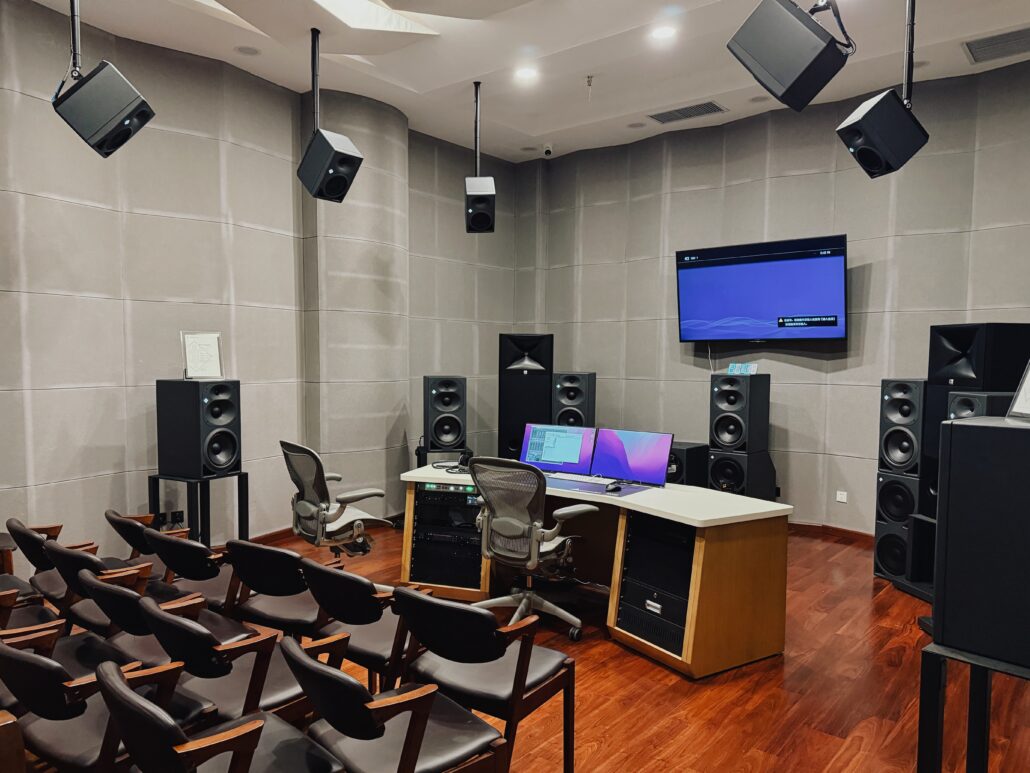
The mix was completed primarily in Beijing Film Academy’s Dolby Atmos studio using a 9.1.6 speaker configuration, with binaural checks done through the Dolby Atmos Renderer.
But one realization stood out.
“Most listeners won’t hear this on a full Atmos system,” Chen says. “They’ll use headphones or device speakers, and every platform renders immersive audio differently.”
That awareness changed how he approached decisions.
“Thinking about real-world playback became just as important as the studio experience.”
Lessons and Advice for Emerging Engineers
For students tackling their first Atmos mix, Chen’s advice is simple.
“Focus on musical thinking before technical complexity,” he says. “Atmos is about narrative and emotion, not showing off spatial tricks.”
The most rewarding part of the project wasn’t the final bounce.
“It was the process,” Chen reflects. “This project reminded me that mixing is a creative act — one that reshapes how we think about space, sound, and expression.”